What Excites and Worries Industry Leaders About AI in TIC?
The same leaders who see AI unlocking capacity and faster turnaround also carry real concerns about trust, accountability, and getting adoption wrong.
Talk to enough testing, inspection, and certification leaders about AI and a pattern emerges. The same people are genuinely excited and genuinely worried, often in the same sentence. That tension is not indecision. It reflects a clear-eyed read of an industry where trust is the product and mistakes carry regulatory weight.
What excites them: capacity and faster turnaround
The optimism is concrete. Leaders see AI removing the navigational and coordination work that consumes reviewer time: chasing missing documents, hunting through technical files, and drafting routine sections of reports. Freeing expert capacity matters in a market where demand for certification keeps rising and qualified reviewers are scarce. Done well, AI lets the same team handle more volume with shorter, more predictable cycle times.
What excites them: a better experience for clients
Beyond internal efficiency, leaders are drawn to what AI can do at the client interface: proactive completeness feedback before formal review, visible progress across review stages, and structured findings linked to evidence. That turns certification from an opaque process with periodic surprises into something clients can follow and trust. For many leaders, that improved experience is the most compelling part of the story.
What worries them: trust, accountability, and rigour
The concerns are just as concrete. TIC decisions must hold up under audit, and leaders worry about anything that blurs the line between an automated suggestion and a certifier's accountable judgment. They are wary of black-box outputs that cannot be traced, of automation that quietly erodes rigour to save time, and of tools that create more reconciliation work than they remove. The fear is not that AI is too powerful. It is that careless adoption damages the trust that took decades to build.
What worries them: adopting it the wrong way
Leaders also worry about execution. Buying software before involving reviewers, layering a chat tool onto unchanged processes, or chasing a flashy demo that never reaches production. These failure modes are familiar and costly. The anxiety is less about the technology and more about whether their organization can absorb the change without losing what makes their certification credible.
- Excitement: reclaiming reviewer capacity from low-value navigation work
- Excitement: faster, more transparent service clients can actually follow
- Worry: preserving traceability and human accountability for every decision
- Worry: adopting AI in a way that adds rigour instead of quietly eroding it
The leaders who move forward hold both at once
The most credible TIC leaders do not resolve this tension by picking a side. They let the excitement set the ambition and the worry set the guardrails: pilot on a bounded workflow, keep human sign-off central, prove traceability, then expand. Treating both feelings as legitimate is what separates thoughtful adoption from either reckless hype or paralysed caution.
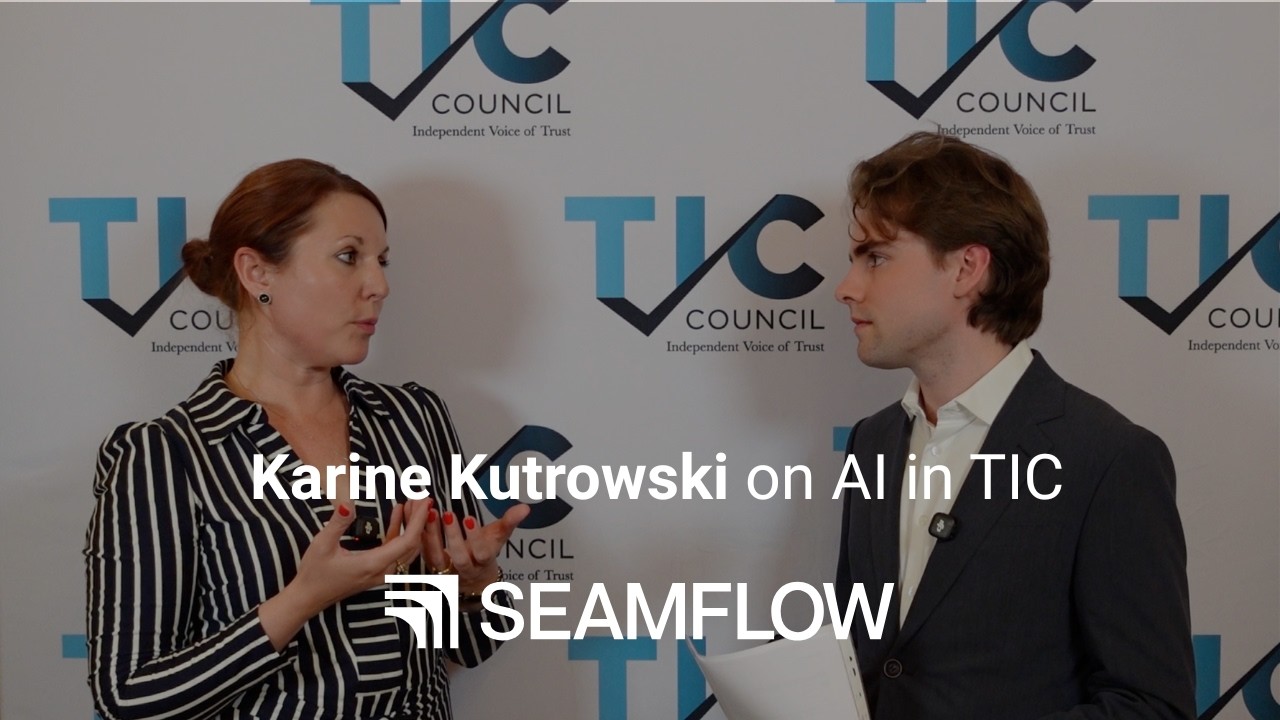
We explore both sides in a short clip from our conversations with industry leaders. Watch below, or book a call to discuss how Seamflow supports AI adoption that respects the rigour TIC work demands.